
Encyclopedia
Mother of Pearl: Magical Properties, Meaning & Who Should Wear It

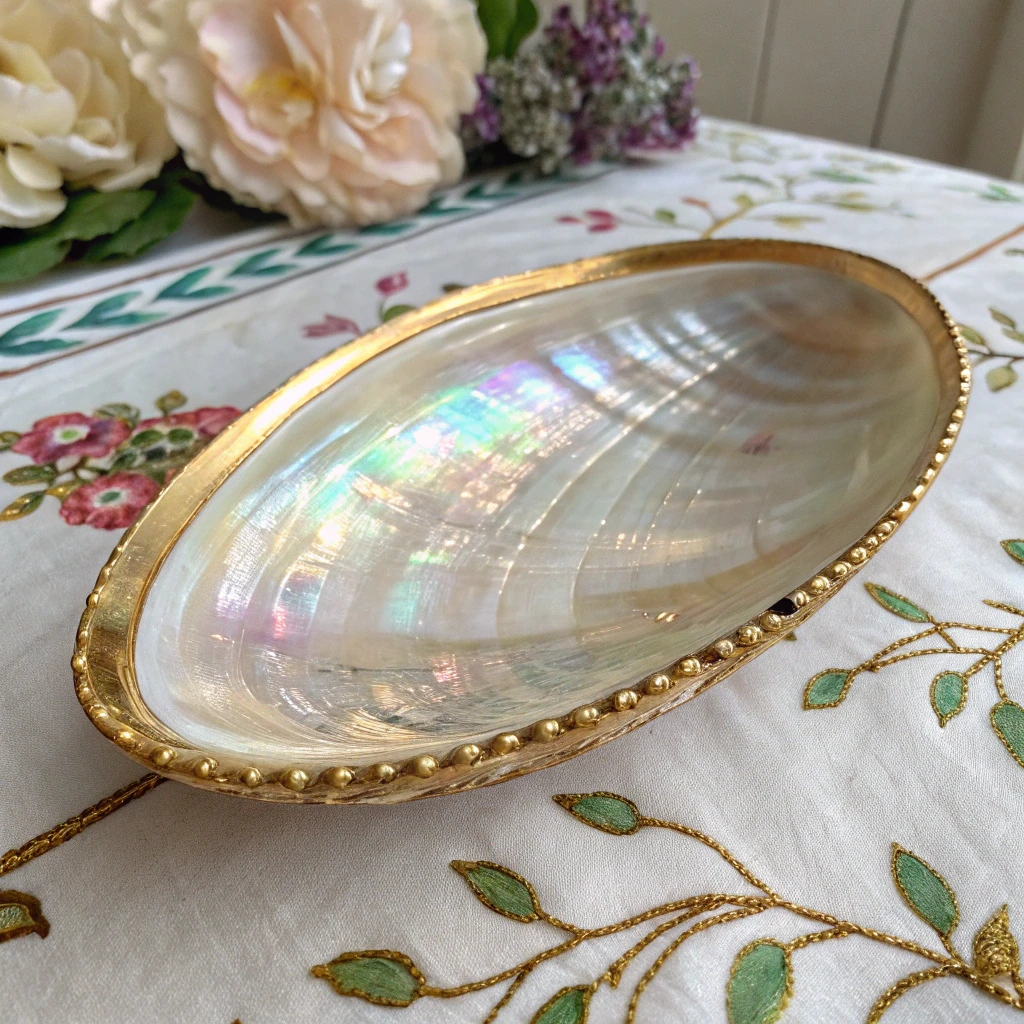
Mother of Pearl Stone Overview
Zodiac Signs
- All signs except Gemini


Ruling Planet
- Venus
- Moon

Element
- Water

Associated Chakra
- Sahasrara (Crown Chakra)
- Ajna (Third Eye Chakra)
- Anahata (Heart Chakra)


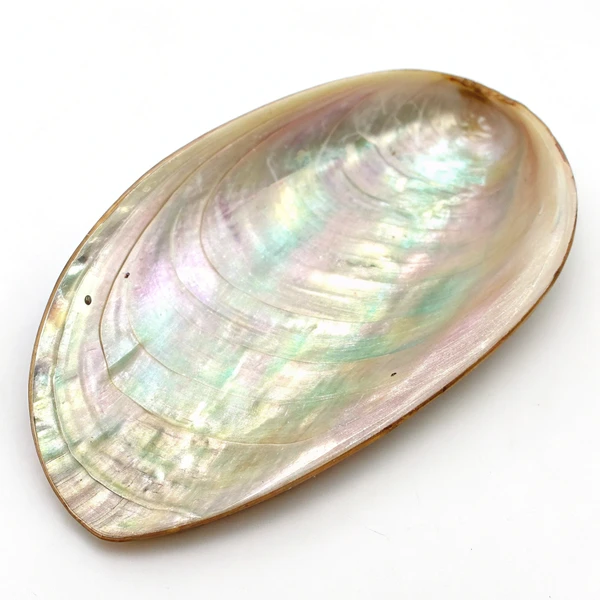

Major Deposits
- Red Sea
- Pacific Ocean Islands
- Persian Gulf
- Borneo
- Sri Lanka (Ceylon)
It combines the power of the sun and the might of underwater currents, the beauty of ocean waves and the lightness of air—this is how one might describe mother of pearl. This natural material captivates with its mystery and extraordinary iridescence. During the 10th-12th centuries, it enjoyed immense popularity among nobility. Today, it’s beloved by fashion enthusiasts who value not only the appearance of jewelry but also its inner power.
What is Mother of Pearl?
Mother of pearl is a natural material formed inside mollusk shells. It’s the “parent” of pearls. Throughout their lives, mollusks produce a secretion. The discharged fluid deposits on shell walls and hardens, creating an iridescent layer. When a foreign object enters the shell, the mollusk protects itself by surrounding it with layers of nacre (mother of pearl).
Interesting fact: The name comes from the German “Perlmutter,” meaning “Mother of Pearl.”
By nature, mother of pearl is neither a precious nor semi-precious stone. Moreover, gemologists don’t even classify it as a gemstone category. It’s simply a natural material. However, in beauty and magical properties, it’s in no way inferior to precious stones, while being more affordable in price. Mother of pearl forms in much greater quantities than pearls.
Description and Appearance
Mother of pearl consists of thin plates formed from layers of calcium carbonate (each layer’s thickness doesn’t exceed 0.5 microns). The calcium carbonate layers are separated by elastic polymers. This structure explains the extraordinary iridescence created on the natural material’s surface.
In external characteristics, mother of pearl resembles pearl. The only difference lies in the calcium plate arrangement: in mother of pearl, they’re positioned parallel to the base, while in pearl they’re perpendicular to it.
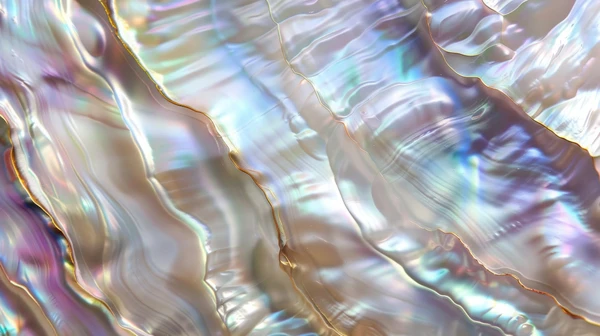
Mother of pearl’s distinctive feature is its rainbow iridescence. This can be bright and colorful or neutral and subtle. This magical shimmer results from light refraction through the substance’s layers.
History and Discovery
There’s no precise date for mother of pearl’s discovery. It’s only known that people began using it almost simultaneously with finding mollusks. Initially, this substance served as currency. Over time, it became used for creating jewelry. Egyptian pyramids contained mother of pearl inlays. In Iran, archaeologists discovered a necklace with this mineral manufactured in Mesopotamia over 7,000 years ago.
Mother of pearl’s history is fascinating. This substance has been used in various ways:
- During medieval times, healers ground mollusk inner layers into powder for medicinal use
- In 17th-18th century Europe, mother of pearl was crafted into vanity table tops, boxes, and snuff boxes
- In China, the marine material decorated fans and ornamental objects
One of history’s richest mother of pearl collections belonged to Catherine the Great of Russia. It consisted of over 100 unique specimens. These can be viewed at the Hermitage Museum in St. Petersburg.
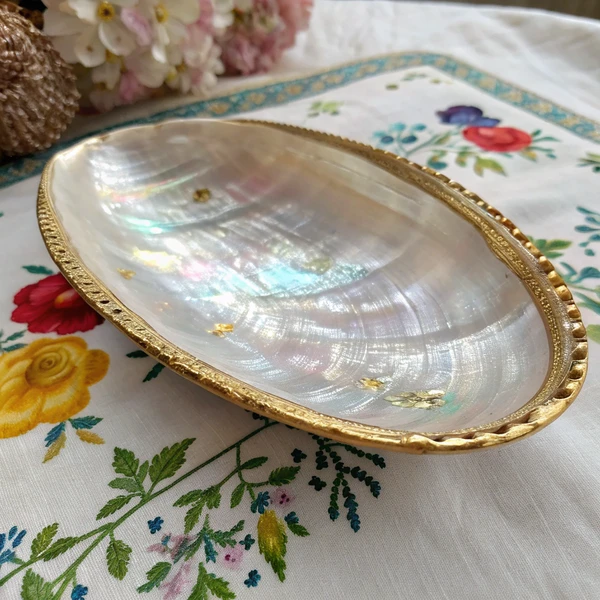
Physical and Chemical Properties
Mother of pearl is a soft material that responds well to processing, allowing jewelers to create diverse accessories. On the Mohs scale, the component’s hardness is 4 units. Despite its softness, mother of pearl exhibits good strength (stronger than calcite and gypsum but weaker than apatite and orthoclase). The substance’s density is 2.7 g/cm³. Mother of pearl possesses a glassy luster and is opaque.
The chemical composition consists primarily of:
- Calcium carbonate (aragonite) – 82-86%
- Organic matrix (conchiolin) – 10-14%
- Water – 2-4%
This unique composition, combined with the layered microstructure, creates the characteristic iridescence and durability that make mother of pearl so valued.
Mother of Pearl Mining and Sources
Mother of pearl is harvested from both freshwater and saltwater environments. Most of it forms under natural conditions, though it’s often a byproduct of cultured pearl farming.
Primary harvesting locations include:
- Red Sea
- Pacific Ocean islands
- Persian Gulf
- Borneo
- Sri Lanka (formerly Ceylon)
- Australia
- Philippines
- Japan
An interesting discovery occurred in Oklahoma, USA, where recently opened ancient shells contain mother of pearl layers, representing some of the oldest nacre specimens found.
The harvesting location directly influences external characteristics. Freshwater sources produce only white mother of pearl, while oceans and seas yield multi-colored varieties: gray, red, and others.
Different mollusk species produce distinct nacre qualities. The most prized varieties come from:
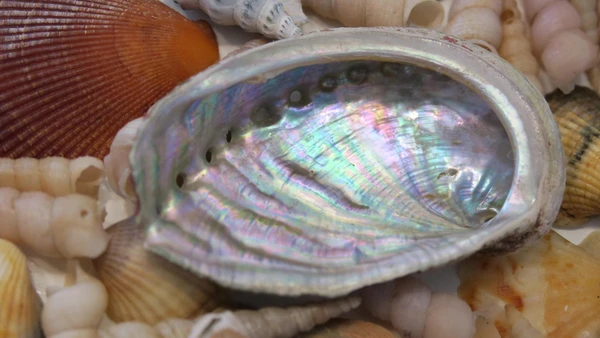
- Abalone (Haliotis) – produces the most vibrant iridescent colors
- Trochus shells – create dense, durable nacre
- Pearl oysters – generate high-quality, lustrous mother of pearl
- Freshwater mussels – produce softer, more delicate nacre
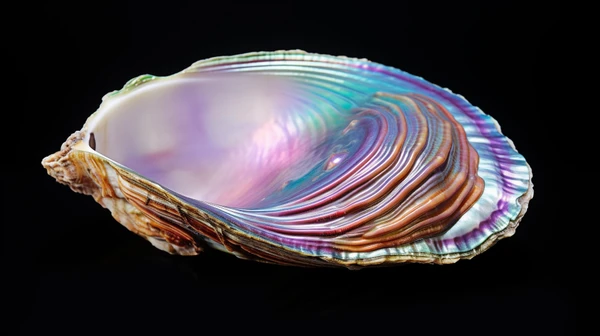
Colors and Varieties
Mother of pearl boasts a rich color palette. Its external features directly depend on the mollusks that produced the unique natural layer:
- Haliotis (Abalone) — Purple, red, gold, green. Harvested only in the Pacific Ocean. Features the brightest rainbow iridescence. Blue and pink specimens are most valuable.
- Cassis — Blue. Harvested in Brazil and India. Possesses light blue shade with black inclusions.
- Manila — White. Harvested in India. Features pure pearl shade. Differs from natural pearls only in shape.
- Sea Ear (Red Abalone) — Red. Harvested off California, Japan, and Australia coasts. Distinguished by fiery red shade.
- Pinna — Black. Harvested in Mediterranean Sea and Africa. These minerals (like the mollusk itself) are extremely rare.
- Venus — Purple. Harvested in Arctic and Atlantic Ocean waters.
The most sought-after variety is Haliotis (abalone). These mollusks produce mother of pearl in virtually all shades. Pink, black, and blue specimens are most valuable and expensive. White minerals are most common and therefore least valuable. Fraudsters often exploit this by dyeing white mother of pearl to increase its “value” with a “rarer” shade.
Magical Properties of Mother of Pearl
Initially, mother of pearl gained widespread use due to its unique appearance. Over time, people noticed this material positively influenced their lives. Subsequently, healers and spiritual practitioners actively adopted it.
Today, mother of pearl is among many esoteric practitioners’ favorite materials. Its magical properties resemble pearl’s, but mother of pearl energy is gentler and more forgiving. Thanks to this, the mineral can:
- Provide comprehensive protection to its owner — Guards against evil spirits and curses. Mother of pearl protects from both external negative energetic influences and internal ones.
- Preserve family harmony — Mother of pearl symbolizes the birth of something new. It helps couples wishing to conceive successfully continue their lineage. This mineral also prevents frequent arguments and disagreements.
- Improve material circumstances — Mother of pearl doesn’t attract vast wealth but grants its owner new opportunities for income increase and ensures financial stability.
These magical properties are universal. More specific actions the mineral can perform depend on its shade:
- White — Reduces tension, protects from serious stress, endows person with confidence, helps achieve inner harmony.
- Black — Reveals intuition, helps develop psychic abilities, makes person mentally stronger.
- Pink — Teaches opening feelings, improves family relationships, helps become more romantic.
- Brown — Promotes career advancement, helps person gain better treatment from management, potential partners, and colleagues.
Mother of pearl positively affects all people regardless of age, profession, or aura. The main condition is being open to magical assistance. Children do this especially well. In response to childlike openness and innocence, mother of pearl grants its young owners total protection from the world’s negativity.
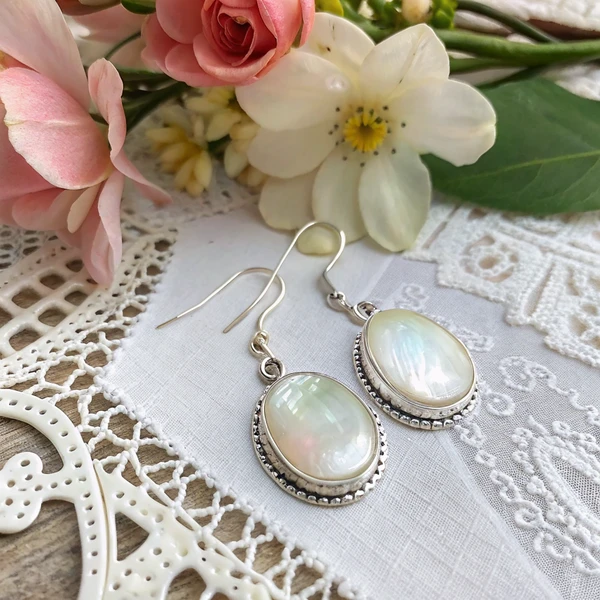
Mother of Pearl as Talisman and Protective Charm
Throughout history, mother of pearl has served as a powerful protective talisman. Ancient cultures worldwide recognized its ability to shield wearers from harm and negative influences.
As a Protective Amulet:
- Spiritual protection — Creates an energetic shield around the wearer, deflecting psychic attacks and negative intentions
- Emotional safeguarding — Helps maintain emotional boundaries and prevents energy drain from toxic relationships
- Physical safety — Traditionally believed to protect travelers, especially those journeying by sea
- Home protection — When placed in the home, mother of pearl creates a peaceful, harmonious environment
Talisman Powers:
- For new beginnings — Ideal for those starting new ventures, relationships, or life chapters
- For mothers and children — Especially protective for pregnant women and young children
- For artists and creatives — Enhances creative inspiration and artistic expression
- For relationships — Strengthens bonds between partners and family members
The most powerful mother of pearl talismans are those inherited from family members, as they carry accumulated protective energy from previous generations.
Healing Properties and Health Benefits
Crystal healing practitioners have used mother of pearl for centuries to support various aspects of health and wellness. While not a substitute for medical treatment, many believe it offers therapeutic benefits.
Physical Healing Properties:
- Digestive health — Traditionally used to soothe digestive issues and support stomach function
- Skin conditions — Believed to promote healthy, radiant skin and accelerate healing
- Vision support — Used in folk medicine for eye health and clarity
- Immune system — Thought to strengthen natural defenses and vitality
- Calcium absorption — May support bone health and calcium metabolism
- Heart health — Believed to support cardiovascular function and blood pressure regulation
Emotional and Mental Healing:
- Stress relief — Calms nervous system and reduces anxiety
- Mood stabilization — Helps balance emotions and prevent mood swings
- Depression support — Lifts spirits and combats melancholy
- Relaxation — Promotes deep relaxation and peaceful sleep
- Emotional trauma — Assists in healing past emotional wounds
Chakra Healing:
Mother of pearl works with three primary chakras:
- Crown Chakra (Sahasrara) — Connects to higher consciousness and spiritual awareness
- Third Eye Chakra (Ajna) — Enhances intuition and psychic perception
- Heart Chakra (Anahata) — Opens heart to love, compassion, and emotional healing
How to Use for Healing:
- Wear as jewelry close to affected areas
- Place on chakra points during meditation
- Keep in your living or working space for continuous energy
- Hold during stress or anxiety
- Use in crystal healing layouts
Important: Always consult healthcare professionals for serious health concerns. Crystal healing should complement, not replace, conventional medical treatment.
Mother of Pearl Properties for Men and Women
Mother of pearl offers unique benefits tailored to different energies and needs.
For Women:
- Feminine energy enhancement — Strengthens connection to divine feminine and lunar cycles
- Fertility support — Traditionally used to support conception and healthy pregnancy
- Emotional balance — Helps navigate hormonal changes and emotional transitions
- Self-confidence — Boosts self-esteem and inner beauty recognition
- Intuition — Enhances natural intuitive abilities and inner knowing
- Relationship harmony — Improves communication and emotional connection with partners
- Motherhood — Supports nurturing qualities and maternal instincts
For Men:
- Emotional intelligence — Helps develop emotional awareness and expression
- Stress management — Provides calming influence during high-pressure situations
- Career success — Supports professional advancement and networking
- Communication skills — Improves ability to express feelings and intentions
- Leadership qualities — Enhances diplomatic and collaborative leadership
- Relationship skills — Helps become more attentive and understanding partners
- Work-life balance — Assists in maintaining equilibrium between career and personal life
Both genders benefit from mother of pearl’s overall protective, calming, and harmonizing properties. It helps anyone seeking greater emotional balance, spiritual connection, and life satisfaction.
Mother of Pearl Zodiac Sign Compatibility
Mother of pearl is a natural, maximally pure material. This explains its universality regarding zodiac sign compatibility. Representatives of all constellations can wear mother of pearl jewelry. The only exception is Gemini. Due to this sign’s characteristic traits, mother of pearl cannot fully manifest its magical properties for them. All other signs can freely wear jewelry with this mineral, relying on its positive energy.
Interesting fact: Mother of pearl’s element is Water. Therefore, it manifests maximum energy for Water zodiac signs.
Highly Recommended For:
- Pisces — This mineral helps become more confident and decisive. It assists in resolving complex and controversial situations.
- Aquarius — Mother of pearl helps achieve faster career advancement and professional recognition.
- Cancer — Enhances emotional intuition and provides protective energy for sensitive nature.
- Scorpio — Amplifies transformative power and helps navigate emotional depths.
Beneficial For:
- Taurus — Provides grounding and supports appreciation for beauty
- Virgo — Assists in emotional expression and reducing perfectionism
- Libra — Enhances natural harmony-seeking abilities
- Sagittarius — Helps balance adventurous spirit with emotional wisdom
- Capricorn — Softens rigid tendencies and encourages emotional openness
- Leo — Teaches humility while maintaining confidence
- Aries — Calms impulsive nature and promotes thoughtful action
Less Compatible:
- Gemini — The dual nature of Gemini conflicts with mother of pearl’s harmonizing energy, potentially causing confusion rather than clarity
Mother of Pearl Compatibility with Names
Mother of pearl resonates particularly well with certain names due to energetic vibrations and numerological correspondences.
Best Compatibility for Men:
- Michael — Enhances natural leadership and protective instincts
- James — Supports emotional depth and relationship skills
- Christopher — Amplifies spiritual connection and intuition
- Benjamin — Strengthens family values and financial stability
- Matthew — Enhances communication and diplomatic abilities
Best Compatibility for Women:
- Emily — Amplifies natural grace and emotional intelligence
- Sarah — Strengthens intuitive abilities and mothering instincts
- Rachel — Enhances creative expression and romantic nature
- Hannah — Supports spiritual growth and inner wisdom
- Jessica — Boosts confidence and social connections
Names with Strong Water Element Connection:
- Marina/Marin — Natural affinity through water association
- Pearl/Perla — Direct connection to mother of pearl energy
- Luna — Lunar connection enhances mother of pearl properties
- River — Water element amplifies mineral’s power
While these names show strongest compatibility, anyone can benefit from mother of pearl regardless of their name. The key is openness to receiving the mineral’s gentle, protective energy.
Compatibility with Other Stones
Mother of pearl is quite adaptable when worn with other materials. It combines ideally with all Water element representatives:
- Alexandrite
- Pearl
- Coral
- Opal
- Moonstone
- Aquamarine
- Larimar
When in close proximity, these minerals nourish each other, contributing to more vibrant manifestation of their power.
Excellent Combinations:
- Mother of Pearl + Moonstone — Amplifies lunar energy and intuition
- Mother of Pearl + Pearl — Doubles protective and calming properties
- Mother of Pearl + Aquamarine — Enhances communication and emotional clarity
- Mother of Pearl + Rose Quartz — Strengthens love and compassion
Neutral Combinations:
- Earth element stones (jade, malachite, jasper) — Won’t harm but won’t significantly enhance
- Air element stones (amethyst, citrine, clear quartz) — Coexist peacefully without strong synergy
Incompatible Combinations:
Mother of pearl doesn’t combine with Fire element gemstones. It shouldn’t be worn simultaneously with:
- Ruby
- Diamond
- Zircon
- Garnet
- Carnelian
- Sunstone
Fire and Water stones extinguish each other’s energy. Such combinations won’t negatively affect the person but shouldn’t be expected to produce positive effects either.
How to Distinguish Real Mother of Pearl from Fakes
Mother of pearl’s amazing aesthetic and magical properties have made this mineral popular worldwide. This popularity attracts fraudulent jewelers who create “mother of pearl” from ordinary plastic or glass using special paint. Such fakes may look quite impressive but possess no power.
To avoid becoming a fraud victim, remember several differences between fakes and natural minerals:
Natural Mother of Pearl:
- Surface is uneven with small curves and grooves
- Standard and common thickness up to 1.5 cm (0.6 inches)
- More pastel shade (even with multi-colored specimens)
- Cool to touch and warms slowly
- Shows depth in iridescence with multiple color layers
- Has natural weight appropriate to size
- Displays organic, irregular patterns
Fake Mother of Pearl:
- Perfectly smooth, uniform surface
- Often presented in thickness exceeding 2 cm (0.8 inches)
- Garish colors obviously resembling artificial paint
- Warms quickly when held
- Shows surface-only shimmer without depth
- Feels too light or too heavy for size
- Displays repetitive, printed-looking patterns
Simple Tests:
- Needle test — Drawing a needle across real mother of pearl leaves no marks. On fakes, the needle removes paint layers.
- Heat test — Natural nacre conducts heat slowly; plastic heats rapidly
- UV light test — Authentic mother of pearl may show subtle fluorescence
- Water test — Real nacre maintains color in water; some fakes fade or show color bleeding
Professional Verification:
For valuable pieces, request:
- Certificate of authenticity
- Source information (mollusk species, origin)
- Independent gemological assessment
Synthetic and Cultured Mother of Pearl
The distinction between natural, cultured, and synthetic mother of pearl is important for buyers to understand.
Natural Mother of Pearl:
- Forms completely naturally inside wild mollusks
- Takes years to develop full thickness
- Most expensive and rare
- Unpredictable patterns and colors
- Full energetic properties for metaphysical use
Cultured Mother of Pearl:
- Produced in farmed mollusks
- Humans initiate process but mollusks create nacre naturally
- Quality similar to natural
- More affordable than wild-harvested
- Retains most energetic properties
- Environmentally sustainable option
Synthetic/Imitation Mother of Pearl:
- Created in laboratories or factories
- May use plastics, resins, or glass
- Can mimic appearance well
- No energetic or metaphysical properties
- Very affordable
- Used primarily for costume jewelry
Manufacturing Methods:
- Essence d’Orient — Made from fish scales, creates pearl-like effect
- Resin composites — Mixed with crushed shell, convincing appearance
- Printed patterns — Applied to base materials, lowest quality
Identifying Synthetics:
- Price significantly below market rate for natural
- Perfect uniformity in color and pattern
- Lacks characteristic weight of natural nacre
- Missing organic texture and depth
- May have chemical smell when heated
While synthetic mother of pearl serves decorative purposes, it lacks the healing and metaphysical properties attributed to natural nacre. For spiritual and healing use, authentic mother of pearl is essential.
Applications and Uses of Mother of Pearl
Mother of pearl’s beauty, durability, and workability make it valuable across multiple industries and applications.
Jewelry and Accessories:
- Necklaces and pendants
- Earrings (studs, drops, hoops)
- Bracelets and bangles
- Rings and bands
- Brooches and pins
- Hair accessories (combs, clips, barrettes)
- Cufflinks and tie pins
- Watch faces and dials
Decorative Items:
- Inlay work in furniture
- Decorative boxes and cases
- Picture frames
- Mirror frames
- Musical instrument inlays (guitars, pianos)
- Knife and tool handles
- Ornamental buttons
- Religious icons and crosses
Collectibles and Art:
- Cameos and carved pieces
- Miniature paintings on nacre
- Antique snuff boxes
- Vintage compacts and vanity items
Practical Applications:
- Button manufacturing
- Fashion accessories
- Cosmetics (crushed pearl powder)
- Traditional medicine
- Architectural decoration
Modern Uses:
- Bio-medical research (bone grafts)
- Nanotechnology applications
- Sustainable luxury materials
- Eco-friendly fashion
Value Factors:
Quality and price depend on:
- Source and rarity of mollusk species
- Thickness and size of nacre pieces
- Intensity and variety of iridescence
- Craftsmanship and design
- Age and provenance (antique pieces command premiums)
Mother of pearl’s versatility ensures its continued popularity across industries while maintaining its status as a treasured natural material.
Care and Maintenance Guidelines
Mother of pearl accessories can be worn daily. To preserve their original appearance over the longest possible period, simply prevent exposure to direct sunlight and limit heating. Avoid perfume contact. When interacting with chemical elements and acids, mother of pearl coating dulls and acquires yellowish tint.
Cleaning Instructions:
- Use soft microfiber cloth or chamois leather for regular cleaning
- For light dirt, wipe gently with slightly damp cloth
- For heavier soiling, wash in mild soapy water (use gentle, pH-neutral soap)
- Rinse thoroughly with clean water
- Dry immediately with soft cloth
- Never use ultrasonic cleaners or steam cleaning
What to Avoid:
- Harsh chemicals, bleach, ammonia
- Abrasive cleaners or scrubbing pads
- Extreme temperature changes
- Extended sun exposure
- Perfumes, hairsprays, cosmetics
- Chlorinated water (pools, hot tubs)
- Acidic substances (vinegar, lemon juice)
Storage Recommendations:
- Store separately from harder gems that might scratch
- Keep in soft cloth pouch or lined jewelry box
- Maintain moderate humidity (mother of pearl contains water)
- Avoid airtight containers in very dry climates
- Store away from heat sources
Energetic Cleansing:
- Rinse under cool running water to clear absorbed negativity
- Place in moonlight (especially full moon) to recharge
- Smudge with sage or palo santo
- Place on selenite charging plate
- Visualize white light cleansing the piece
When to Seek Professional Help:
- Deep scratches or damage to nacre
- Loosened settings in jewelry
- Significant discoloration
- Cracked or peeling layers
With proper care, mother of pearl jewelry and items can last generations, often becoming treasured family heirlooms.
Choosing and Purchasing Mother of Pearl
The ideal time for purchasing mother of pearl jewelry is during the 9th, 12th, 16th, and 29th lunar days. On other days, items with this mineral should be acquired only under one condition—a strong inner desire to obtain mother of pearl.
Selection Guidelines:
For Healing Purposes:
- Choose items corresponding to specific needs:
- Earrings for hearing issues or mental clarity
- Bracelets for joint mobility or arm-related concerns
- Necklaces for throat, thyroid, or heart issues
- Rings for finger/hand problems or general protection
As Gifts:
- Pendants and rings make excellent universal gifts
- Distinguished by versatile impact
- Suitable for various occasions and recipients
- Considered especially appropriate for:
- New mothers
- Graduates
- Wedding anniversaries
- Milestone birthdays
For Child Protection:
- Small mother of pearl brooch or amulet works best
- Can be pinned to clothing or bag
- Provides gentle, continuous protection
- Appropriate from infancy through adolescence
Quality Considerations:
- Luster — Seek deep, multi-layered iridescence
- Color — Natural, subtle tones more valuable than artificially bright
- Thickness — Thicker nacre indicates higher quality
- Surface — Some texture is natural; too smooth suggests fake
- Origin — Pieces with documented source command higher prices
Budget Guidelines:
- Costume/fashion pieces: $10-50
- Quality jewelry (small items): $50-200
- Premium jewelry (statement pieces): $200-1,000
- Antique or rare specimens: $1,000-10,000+
- Museum-quality historical pieces: $10,000+
Where to Buy:
- Reputable jewelry stores
- Estate sales and auctions (for antiques)
- Specialty online retailers with good reviews
- Direct from sustainable pearl farmers
- Museum gift shops (authentic pieces)
Questions to Ask Sellers:
- What is the source of the mother of pearl?
- Is it natural, cultured, or synthetic?
- What mollusk species does it come from?
- Are there any treatments or enhancements?
- What is the care and return policy?
Trust Your Intuition:
Beyond practical considerations, pay attention to how you feel when holding or viewing the piece. Genuine connection to mother of pearl often manifests as:
- Immediate attraction to specific piece
- Sensation of calm when holding it
- Persistent thoughts about the item
- Dreams or synchronicities related to purchase
Mother of pearl is an amazing substance. It doesn’t belong to gemstones, precious minerals, or natural stones categories. Yet this doesn’t prevent it from being one of the most sought-after materials among jewelers and most popular among natural accessory enthusiasts. This can be explained by mother of pearl’s incomparable appearance, numerous beneficial properties, and universality.
When you find your perfect mother of pearl piece, it will serve as both beautiful adornment and powerful spiritual companion, offering protection, harmony, and connection to the ancient wisdom of the oceans.