
Encyclopedia
Ammonite Properties: Physical and Basic Properties of Ammonite


Ammonite Meaning, Magical Properties, Colors & Zodiac Compatibility — Full Guide
Ammonite is one of the most fascinating gemstones of organic origin, formed from ancient marine fossils that are more than 65 million years old. Its unique spiral structure, opalescent shine, and symbolic depth make it a highly valued mineral in jewelry, energy work, and interior décor. From the viewpoint of gemology, ammonite is not a typical crystal but a fossilized shell of extinct marine cephalopods belonging to the subclass Ammonoidea. Because of its layered mineral composition, ammonite combines the physical characteristics of both biological material and inorganic minerals.
The shell structure typically consists of aragonite, calcite, pyrite, and sometimes siderite. These minerals crystallize inside the chambers of the shell over millions of years, creating vibrant iridescent effects known as ammolite — a rare and valuable gemstone variety.
Ammonite hardness varies from 3.5 to 4.5 on the Mohs scale, making it relatively soft and requiring careful handling. Its density ranges between 2.6 and 2.8 g/cm³, depending on the mineralization level.
One of the most striking features of ammonite is its natural logarithmic spiral. This geometric pattern follows the Fibonacci sequence, symbolizing universal harmony, evolution, and infinity. This spiral is what makes ammonite so energetically powerful and spiritually important in metaphysical practices. Many users and crystal healers believe that the fossil carries Earth’s ancient memory, stabilizing vibrations and harmonizing the flow of life energy.
From a metaphysical perspective, ammonite is associated with grounding, transformation, and cyclical balance. It is considered a “stone of cosmic knowledge,” believed to strengthen intuition, bring emotional clarity, and align a person with their life purpose. In Feng Shui, ammonite is valued for its ability to attract prosperity and circulate chi energy through its spiral structure.
Overall, the physical and energetic properties of ammonite make it a unique fossil gemstone that unites natural history, aesthetics, and powerful metaphysical symbolism — a combination found in no other crystal.
Ammonite Colors and Varieties
Ammonite comes in a diverse spectrum of colors and varieties depending on its mineral composition, geographical origin, and the conditions under which the fossilized shell transformed over millions of years. While the original ammonite creatures lived in marine environments, the colors we see today are created by mineral replacement, oxidation, and crystallization processes that occurred after their extinction.
The most famous and valuable variety is ammolite — an iridescent, gemstone-quality form of ammonite found primarily in Alberta, Canada. Ammolite displays vivid rainbow colors including red, green, blue, violet, orange, and gold. This play of color occurs due to layers of aragonite microcrystals that diffract light, creating a shimmering effect similar to opal or labradorite but with its own unique texture. Ammolite is graded based on brightness, color variety, and the stability of the mineral layers.
Other varieties of ammonite come in earthy tones such as brown, beige, yellow, gray, black, and olive. These colors result from the presence of minerals like calcite, iron oxide, silica, and pyrite. In some cases, ammonite may exhibit metallic golden patterns caused by pyrite encrustation, making the fossil appear luxurious and highly collectible. These specimens are often used for décor, meditation, and museum displays.
Certain ammonites display suture patterns — delicate, leaf-like lines on the shell surface that reveal the internal chamber structure. These patterns vary by species and formation environment, adding scientific and aesthetic value to the fossil. Suture patterns can be simple, wavy, or highly intricate, resembling botanical motifs.
Additionally, rainbow ammonites—found in Madagascar and other regions—show iridescent flashes similar to ammolite but usually with a more subtle sheen. Their colors range from fiery red to soft green and lavender, depending on the angle of light.
In summary, ammonite varieties range from earthy fossilized shells to rare iridescent gemstones. The diversity of color, structure, and mineral composition makes each specimen unique, enhancing ammonite’s value in jewelry, metaphysical practices, and natural history collections.
Where Ammonites Are Mined
Ammonites are found all over the world, as these ancient cephalopods once inhabited nearly every ocean during the Paleozoic and Mesozoic eras. Their fossilized remains have been discovered on every continent, making ammonite one of the most widespread and scientifically valuable fossils on Earth. However, some regions are particularly renowned for producing high-quality specimens, gemstone-grade ammolite, and unique varieties prized by collectors.
The most famous mining region is Alberta, Canada, specifically the Bearpaw Formation. This geological formation is the world’s primary source of ammolite, the rare and iridescent gemstone variety of ammonite. Only a limited stretch of land along the eastern slopes of the Rocky Mountains contains the specific mineralization conditions necessary for ammolite formation. Canadian ammolite mining is strictly regulated to ensure fossil preservation and responsible extraction.
Another important location is Madagascar, known for its beautifully preserved ammonites with rich colors, intricate suture patterns, and polished fossil specimens widely used in jewelry and interior décor. Malagasy ammonites often display warm tones of yellow, brown, red, and orange, and are prized for their size, clarity, and natural luster. The island’s unique geological history makes these fossils highly recognizable in the global market.
Morocco is another major source, producing large, well-formed ammonites often found in limestone matrices. These fossils are commonly used for educational, decorative, and metaphysical purposes. Moroccan mines in the Atlas Mountains frequently yield spectacular specimens, some exceeding 1 meter in diameter.
Additional significant sources include:
- Russia (Volga region) — known for pyritized ammonites with golden metallic surfaces.
- United Kingdom (Jurassic Coast) — famous for naturally weathered ammonites found along the shoreline.
- Germany — particularly Holzmaden and Solnhofen, producing remarkably detailed fossils.
- USA (Montana, South Dakota, Utah) — home to various well-preserved Cretaceous ammonites.
Each mining location offers ammonites with distinct mineral compositions, colors, and preservation quality. This geological diversity contributes to the fossil’s global appeal, making ammonite a treasure valued by scientists, jewelers, collectors, and spiritual practitioners alike.
Uses and Processing
Ammonite is a versatile fossil gemstone used in jewelry, interior décor, energy practices, and scientific studies. Its remarkable spiral geometry, mineralized structure, and historical value make it appealing both aesthetically and symbolically. Because each ammonite is unique in color and pattern, artisans and collectors appreciate it for the individuality and natural artistry captured within every specimen.
Jewelry Making
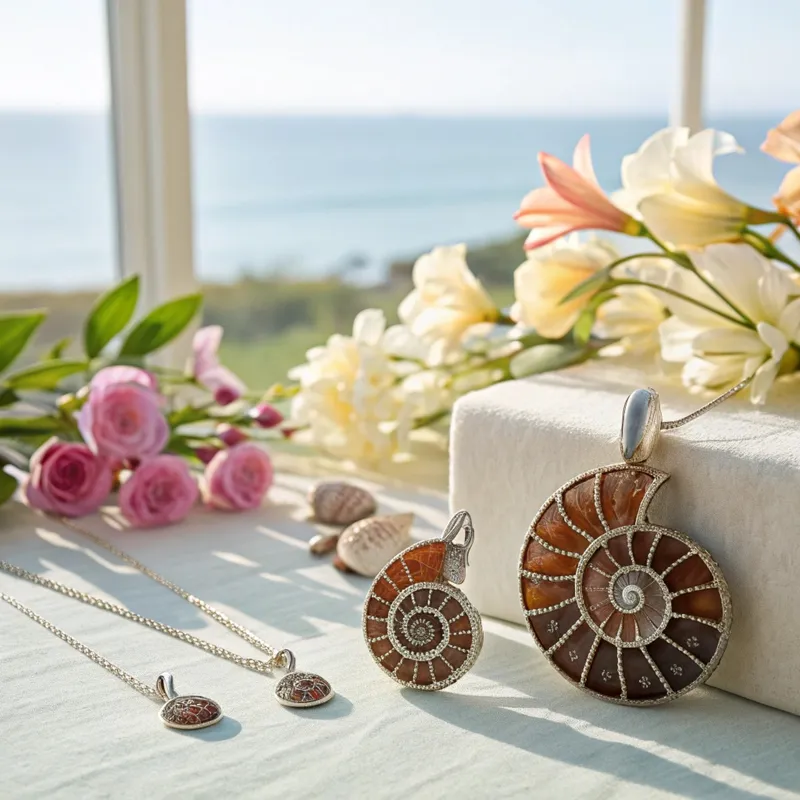
Many ammonites, especially those transformed into ammolite, are crafted into high-end jewelry. Rings, pendants, earrings, and brooches often feature polished ammonite slices showcasing the vibrant internal colors. Ammolite gemstones may receive stabilization treatments to enhance durability, as their natural aragonite layers can be fragile. Some jewelry pieces include a protective quartz or spinel cap to prevent scratches and increase longevity.
Interior Decoration and Feng Shui
Large ammonite fossils are popular additions to home décor, offices, meditation rooms, and spa environments. Their spiral form symbolizes cosmic energy flow and harmony. In Feng Shui, ammonite is considered a powerful enhancer of prosperity, health, and career success. Placing a large ammonite in the living room or workspace is believed to stimulate chi movement and create balanced, supportive energy.
Scientific and Educational Uses
Ammonites play a crucial role in paleontology and stratigraphy. Their widespread distribution and rapid species evolution make them excellent index fossils. Scientists use ammonite species to date rock layers and reconstruct ancient marine environments. Museums also frequently display large ammonite specimens to educate visitors on Earth’s evolutionary history.
Carving and Artistic Processing
Ammonites are often polished, sliced into cross-sections, or carved into decorative objects. Common products include:
- Spiral cabochons
- Fossil bookends
- Tabletops and wall art
- Carved sculptures
- Jewelry inlays
The polishing process reveals hidden chamber structures, colors, and suture lines that are not visible in the raw fossil. Artisans carefully shape and sand the fossil to bring out maximum brilliance without damaging the mineral layers.
Metaphysical and Healing Practices
Ammonite’s spiral design and ancient energy make it popular among energy healers. It is used in meditation, chakra balancing, and grounding rituals. Many practitioners believe that ammonite holds Earth’s ancient vibrations and supports emotional transformation and spiritual growth.
Ammonite Magical Properties
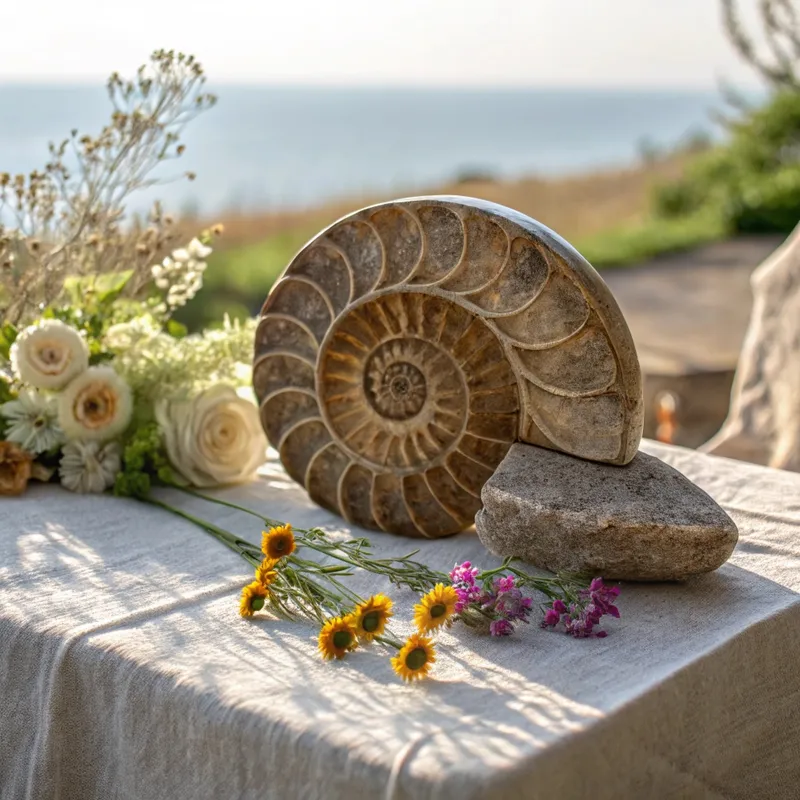
Ammonite is widely regarded as one of the most powerful fossils used in metaphysical practices. Its spiral structure, formed according to the Fibonacci sequence, symbolizes universal harmony, evolution, and the cyclical nature of life. Because ammonites carry millions of years of Earth’s history within them, many spiritual practitioners consider this fossil a source of ancient wisdom and deep grounding energy.
A Stone of Transformation and Evolution
Ammonite is often called a “stone of transformation” because its energy resonates with personal growth, renewal, and forward movement. The spiral pattern is believed to guide a person through significant life transitions, helping them release old behavioral patterns and embrace new opportunities. It supports resilience, adaptability, and emotional flexibility — qualities that encourage inner evolution.
Enhancing Life-Force Energy (Chi / Prana)
In both Feng Shui and crystal healing, ammonite is valued for its ability to generate and circulate life-force energy. The fossil’s spiral acts like a natural vortex that draws in stagnant energy, purifies it, and releases revitalized vibrations. This makes ammonite especially effective for:
- Increasing vitality and motivation
- Boosting creativity and inspiration
- Strengthening emotional resilience
- Restoring inner balance and clarity
Many practitioners place ammonite in meditation spaces or on work desks to maintain productivity, focus, and mental clarity.
Grounding and Protection
Ammonite holds dense, grounding energy due to its fossil origin. It is linked to the Root Chakra and helps stabilize emotions, calm anxiety, and reduce stress. The fossil is also considered a powerful protective talisman, shielding its owner from negative influences and energetic drains. People often keep ammonite near doorways or carry small polished pieces as a personal protective charm.
Manifestation and Prosperity
Because its spiral shape symbolizes continuous flow, ammonite is strongly associated with wealth attraction and manifestation. In Feng Shui, it is placed in prosperity sectors of the home to encourage financial growth, career stability, and business success. The fossil’s dynamic energy supports long-term goal planning and strategic decision-making.
Connection with Ancient Knowledge
Many spiritual traditions believe that ammonite stores Earth’s evolutionary memory. Meditating with ammonite is thought to deepen intuition, expand consciousness, and connect the practitioner with ancestral wisdom. This makes it a valuable stone for spiritual seekers, healers, and those exploring past-life work.
Ammonite Talismans, Amulets, and Charms
Ammonite has been used as a protective and spiritual talisman for centuries. Its unique spiral shape and ancient origin give it symbolic power unlike any other fossil. Across different cultures, ammonite has been associated with protection, prosperity, wisdom, and transformation. Today, it remains one of the most popular metaphysical fossils used in jewelry, home décor, and personal amulets.
Ammonite as a Protective Charm
Because ammonite carries millions of years of Earth’s vibrational history, it is widely believed to create a strong protective field around its owner. This fossil shields against:
- Negative energies and emotional draining
- Toxic environments and stressful situations
- Psychic attacks and external influence
- Energy vampires or manipulative individuals
People often wear ammonite pendants, pocket stones, or bracelets to maintain emotional stability and personal boundaries throughout the day.
A Talisman for Prosperity and Good Fortune
In Feng Shui practices, ammonite is considered a powerful prosperity talisman. The spiral shape represents continuous flow — of money, opportunities, and positive energy. Ammonite talismans are often placed:
- In the wealth sector of the home (southeast corner)
- Near work desks to enhance career growth
- In business spaces to attract clients and boost sales
Ammolite, due to its vibrant iridescent colors, is especially valued for wealth attraction and is believed to amplify abundance intentions.
Spiritual Development and Wisdom
Ammonite talismans help deepen meditation, strengthen intuition, and expand awareness. They are used by spiritual practitioners, healers, and energy workers seeking clarity and connection with higher knowledge. The fossil’s ancient energy supports:
- Third-eye activation
- Past-life exploration
- Deep grounding and stability
- Emotional healing and insight
Holding ammonite during meditation is believed to accelerate personal transformation and increase energy flow throughout the chakras.
Amulets for Personal Growth and Protection on the Journey
Many people carry ammonite as a travel amulet. Its spiral symbol is associated with safe return, making it a meaningful charm for those who frequently travel or face uncertain circumstances. Additionally, ammonite is thought to bring courage, confidence, and emotional stability on new life paths.
Decorative Amulets and Home Talismans
Large ammonite fossils are often displayed in homes as guardians of harmony and balance. Their presence is believed to stabilize emotions, attract prosperity, and deter negativity. Polished ammonite halves, fossil sculptures, and tabletop displays act as powerful protective symbols.
Zodiac Sign Compatibility
Ammonite is a versatile fossil that resonates with many zodiac signs thanks to its grounding, stabilizing, and transformative energy. Because it embodies Earth’s ancient wisdom and the universal spiral of life, ammonite supports emotional balance, personal growth, and energetic renewal. While every sign can benefit from its harmonizing vibrations, some zodiac signs are especially aligned with ammonite’s metaphysical properties.
♑ Capricorn (Best Match)
Capricorn is strongly connected to grounding and Earth energy, making ammonite a perfect companion. The fossil helps Capricorns reduce stress, enhance focus, and maintain emotional stability. It also supports long-term planning and career development — areas where Capricorn naturally excels.
♍ Virgo
Virgos benefit from ammonite’s ability to calm the mind and improve clarity. This fossil helps Virgo release perfectionism, reduce anxiety, and strengthen decision-making. Ammonite brings balance to Virgo’s analytical nature, making it easier to trust intuition.
♉ Taurus
As an Earth sign, Taurus is highly compatible with ammonite. The fossil enhances relaxation, emotional security, and inner peace. It also supports Taurus in financial matters, helping them attract stability, opportunities, and prosperity.
♏ Scorpio
Scorpio resonates deeply with transformation — one of ammonite’s strongest energies. The fossil assists Scorpio in emotional healing, releasing past wounds, and embracing personal rebirth. It also strengthens intuition and psychic abilities.
♋ Cancer
Ammonite helps sensitive Cancer stay grounded and emotionally protected. It creates a safe energetic environment, reduces mood swings, and supports emotional intelligence. Cancers often use ammonite as a protective talisman in stressful environments.
♓ Pisces
For intuitive and dreamy Pisces, ammonite provides stability and grounding. It helps this sign stay centered while enhancing spiritual development, creativity, and clarity during meditation.
♐ Sagittarius
Sagittarius benefits from ammonite’s energy of movement and exploration. The fossil encourages wise decision-making, strengthens intuition, and supports personal growth during travel or new life experiences.
Other Signs
- Leo can use ammonite for confidence and energy balance.
- Aries benefits from ammonite’s calming and grounding vibrations.
- Gemini gains clarity, focus, and emotional equilibrium.
- Libra finds harmony and balance through its stabilizing aura.
- Aquarius appreciates its support in intuitive development and energetic flow.
Conclusion
Overall, ammonite is a powerful fossil suitable for all zodiac signs — but Earth and Water signs tend to feel its effects most strongly. Its spiral energy aligns beautifully with those seeking transformation, grounding, protection, and spiritual growth.
Name Compatibility
Ammonite is a fossil with strong grounding and transformative energy, making it uniquely compatible with certain names—especially those associated with stability, intuition, leadership, and emotional depth. While name compatibility is not a traditional scientific field, many practitioners of numerology and onomastics believe that personal names carry vibrational frequencies that interact with gemstones and fossils. Ammonite’s ancient, spiral-based energy harmonizes especially well with names that express strength, balance, and inner wisdom.
Names Associated with Earth and Stability
Names symbolizing grounding, patience, and reliability resonate deeply with ammonite’s stabilizing energy. These names benefit from ammonite’s calming effect and its ability to enhance emotional resilience.
Examples:
- Alexander, Alexandra
- Michael, Michelle
- Daniel, Daniela
- Victor, Victoria
- Emma, Emily
These names carry strong, structured vibrations that align with ammonite’s Earth-based grounding properties.
Names Connected with Transformation and Growth
Since ammonite is known as a fossil of transformation, names symbolizing renewal, progress, or spiritual evolution match its energetic frequency.
Examples:
- Sophia, Sofia (wisdom)
- Olivia (growth, peace)
- Ethan (strength)
- Gabriel, Gabriella (spiritual development)
- Ariana (higher purpose)
Ammonite supports these individuals by enhancing clarity, intuition, and emotional strength.
Intuitive and Creative Names
People with intuitive or artistic names are often sensitive to energy and benefit from ammonite’s grounding and focus-enhancing vibrations. The fossil helps them stay balanced while unlocking deeper creative flow.
Examples:
- Luna
- Maya
- Isabella
- Noah
- Evelyn
These names connect naturally with ammonite’s spiral energy, which enhances creativity, imagination, and spiritual awareness.
Leadership and Ambition-Oriented Names
Ammonite complements strong, aspirational names by helping the person maintain stability and long-term vision — especially during major transitions.
Examples:
- William
- Christopher
- Natalie
- Andrew
- Benjamin
These individuals benefit from ammonite’s grounding energy and its support in decision-making and personal growth.
Care and Storage
Although ammonite is a fossil that has survived millions of years, it remains a relatively delicate material that requires proper care and mindful storage. Most ammonites contain minerals such as aragonite, calcite, pyrite, and various forms of sediment. These minerals can be sensitive to moisture, chemicals, temperature changes, and physical impact. To preserve the fossil’s natural beauty, iridescence, and structural integrity, it is essential to follow proper care guidelines.
Avoid Water and Chemicals
Ammonite—especially ammolite—can be damaged by prolonged exposure to water. Moisture may weaken the fossil’s mineral layers, cause oxidation, or lead to changes in the surface finish. Never clean ammonite with:
- Soap
- Alcohol
- Chemical cleaners
- Acidic substances
- Ultrasound cleaners
Instead, use a soft, dry cloth or a microfiber pad to gently wipe the fossil.
Protect from Direct Sunlight
Long-term exposure to intense sunlight can cause the colors of ammonite, especially ammolite, to fade over time. To maintain the fossil’s natural vibrancy, keep it away from windowsills, strong UV lighting, or hot display areas.
Handle with Care
Ammonite is relatively soft, ranking 3.5–4.5 on the Mohs scale. It can easily scratch or chip if dropped or rubbed against harder materials. When wearing ammonite jewelry:
- Remove it during sports or physical activities
- Store it separately to prevent contact with metals or hard gemstones
- Avoid dropping or knocking the fossil against surfaces
Optimal Storage Conditions
Store ammonite in a dry, cool place. Ideal storage solutions include:
- A jewelry box with individual compartments
- A padded pouch
- A display case with soft lining
- A sealed container with silica gel to absorb humidity
This helps prevent moisture damage and protects the fossil from dust and accidental impact.
Professional Maintenance
If your ammonite piece has a resin or quartz cap, regular professional polishing can help maintain clarity and shine. For museum-grade specimens or rare ammolite gemstones, it is best to consult fossil preservation specialists.
How to Distinguish a Fake Ammonite
Because ammonite—especially ammolite—has become increasingly popular in jewelry and metaphysical markets, counterfeit or artificially enhanced specimens have also become more common. Fake ammonites may be made from resin, artificially colored shells, or reconstructed fossil fragments. Understanding how to identify a genuine ammonite is essential for collectors, crystal enthusiasts, and buyers looking for authentic pieces.
1. Examine Natural Suture Patterns
Real ammonites have intricate suture lines—leaf-like or wave-like patterns marking the boundaries of internal chambers. These lines are naturally complex, irregular, and not perfectly symmetrical.
Fake ammonites often feature:
- Simplified or uniform patterns
- Printed or etched designs
- Repetition that looks unnatural
If the suture lines look “too perfect,” it may be a replica.
2. Look for Natural Imperfections
Authentic ammonites usually contain:
- Irregularities in color
- Uneven mineral distribution
- Natural cracks or micro-fractures
- Small inclusions of calcite, pyrite, or sediment
A perfectly smooth or flawless surface is a sign of synthetic material or heavy reconstruction.
3. Check the Weight and Texture
Genuine fossilized ammonite has a noticeable weight due to mineralization. It should feel heavier than plastic or resin. The texture of real fossil surfaces is typically cool and solid.
Fake ammonites made from resin feel:
- Warmer to the touch
- Lighter in weight
- Too glossy or smooth
4. Inspect the Back Side
Authentic ammonites—especially polished halves—often show raw fossil texture on the backside. Fake ammonites may have:
- Flat, overly polished backs
- Plastic or resin molds
- Identical patterns repeating on multiple pieces
5. Iridescence Test (For Ammolite)
For gemstone-quality ammolite:
- Real ammolite displays shifting colors depending on the angle of light
- Fake ammolite shows static, painted-looking color layers
Natural ammolite also contains tiny platelets and fragmentation lines visible under magnification.
6. UV Light Reaction
Some fake ammonites fluoresce unnaturally under UV light. Real ammonite generally does not display bright fluorescence.
7. Price Suspicion
Authentic ammonite—especially ammolite—is not extremely cheap. If the price seems too good to be true, it likely is.
Conclusion
Knowing how to evaluate suture lines, texture, weight, color behavior, and mineral structure can help you confidently distinguish real ammonite from imitations. Buying from reputable dealers and certified gemstone sellers ensures authenticity and long-term value.
Ammonite Cost
The cost of ammonite varies widely depending on its size, quality, color, mineral composition, and origin. Because ammonite includes both common fossil specimens and rare gemstone-grade ammolite, prices can range from very affordable to exceptionally high. Understanding the market value helps buyers make informed decisions when purchasing ammonite for jewelry, décor, collections, or metaphysical use.
1. Pricing Factors
Several key factors determine the price of an ammonite specimen:
Size and Shape
Larger ammonites, especially those with well-preserved spirals and chamber details, command higher prices. Small ammonite fossils (2–5 cm) are often inexpensive, while large specimens suitable for display can cost significantly more.
Color and Iridescence
Color is one of the most important pricing components.
- Ammolite (iridescent ammonite) is considered a precious gemstone and can display vibrant red, green, blue, and violet tones.
- Specimens with full-spectrum or intense multi-color effects are the most valuable.
- Regular ammonites with subtle color variations or natural pyrite accents tend to be more affordable.
Quality and Preservation
Well-preserved ammonites with intact suture patterns, minimal cracks, and strong mineralization are more expensive. Any restoration, repair, or filler lowers the value.
Origin
- Canada (Alberta) produces the rarest and most valuable ammolite.
- Madagascar offers beautifully polished ammonites at moderate prices.
- Morocco supplies large display pieces that remain relatively affordable.
- Pyritized ammonites from Russia are prized by collectors for their golden metallic sheen.
2. Price Range
Below is a general overview of ammonite price categories:
- Small fossil ammonites (non-ammolite): $5–$30
- Medium polished specimens: $30–$120
- Large home décor ammonites: $100–$500+
- Pyritized ammonites: $80–$350 depending on size and luster
- Ammolite cabochons: $100–$1,500+
- High-grade ammolite jewelry: $1,000–$20,000+
- Museum-quality ammolite specimens: $20,000–$100,000+
These ranges vary depending on the dealer, rarity, certification, and craftsmanship.
3. Investment Value
Ammolite is one of the rarest organic gemstones, and its supply is geographically limited. Because mining areas are restricted, high-quality ammolite is expected to appreciate over time. Collectors view it as an investment fossil with long-term value.
Conclusion
Ammonite prices reflect its extraordinary beauty, geological significance, and metaphysical appeal. Whether purchasing a small fossil for meditation or a gemstone-grade ammolite for jewelry, buyers can find ammonite in a wide range of prices to fit every budget.